Navigating Deposit Method Ripple Effects on Prop Bet Calculations During Multi-Event Mobile Sessions
Dana Foster · Jul 21, 2026

Navigating Deposit Method Ripple Effects on Prop Bet Calculations During Multi-Event Mobile Sessions
Deposit methods in mobile wagering environments create measurable effects on prop bet calculations when users engage multiple events simultaneously, because processing speeds, associated fees, and confirmation protocols alter available balances in real time. Platforms process credit card deposits in seconds while cryptocurrency transfers often require additional network confirmations that extend up to several minutes, shifting the window during which bettors can lock in odds on player props or micro-events.
Processing Timelines and Balance Availability
Research from the Australian Gambling Research Centre shows that average deposit confirmation times range from under ten seconds for debit cards to over four minutes for certain blockchain-based options during peak hours. Those delays matter when a multi-event session includes live props on concurrent basketball quarters, tennis sets, and baseball innings, where odds move quickly and available funds must appear before placement. Bettors who initiate a deposit mid-session frequently encounter situations where the first event's prop window closes before the second transaction settles, forcing recalculations on remaining legs.
Observers note that e-wallet services such as those integrated with regulated Canadian operators reduce this friction through pre-authorization holds, yet they still generate small variances in displayed balances that affect margin calculations on parlays containing several prop selections. Data indicates these variances become pronounced when users switch between events across different sportsbooks within one mobile app session.
Fee Structures and Net Stake Adjustments
Transaction fees attached to deposit methods directly modify the net amount available for stake allocation, which in turn influences implied probability models used in prop bet sizing. A 2.9 percent processing fee on a credit card deposit of five hundred dollars reduces usable funds by fourteen dollars and fifty cents, prompting adjustments to individual prop stakes to maintain target returns. Industry reports compiled by the Nevada Gaming Control Board document that operators must account for these deductions in their risk engines, especially when mobile sessions span more than three simultaneous events.
Figures reveal that cryptocurrency deposits, while often fee-free at the platform level, expose users to network gas costs that fluctuate with blockchain congestion. During July 2026, several major mobile platforms updated their interfaces to display estimated net balances after fees before confirmation, allowing users to preview ripple effects on upcoming prop calculations without committing funds prematurely.
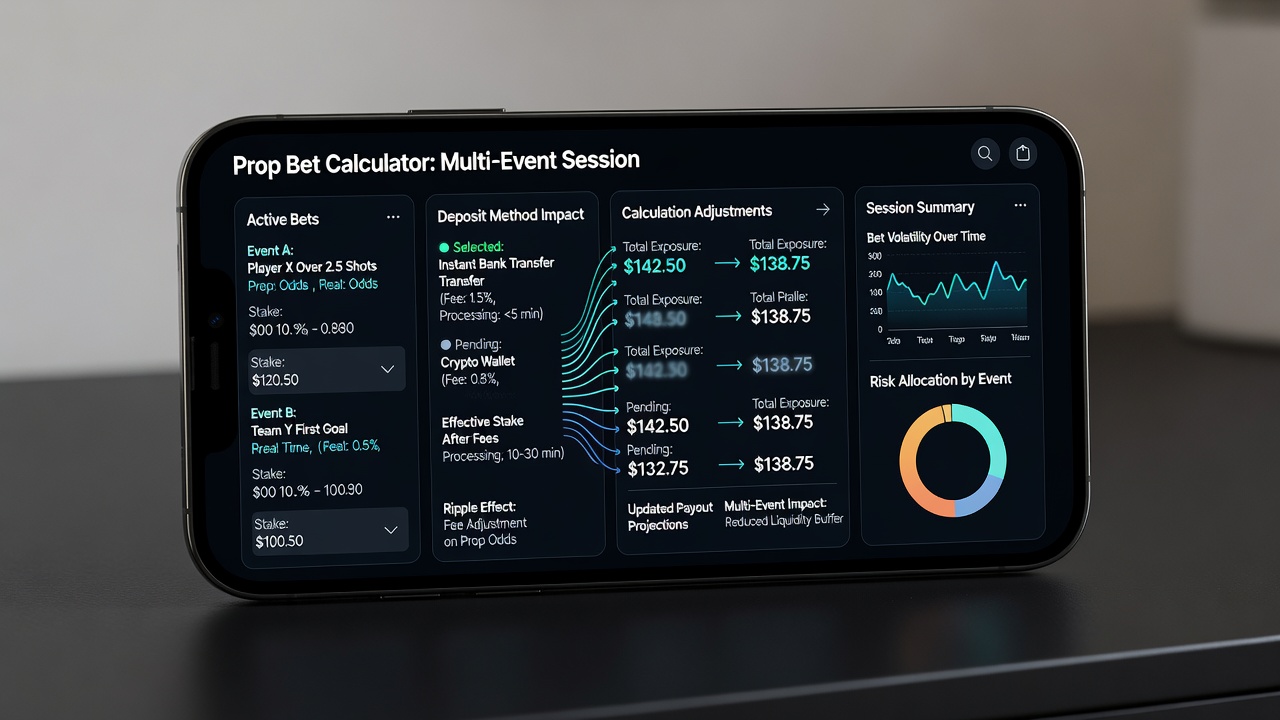
Multi-Event Session Dynamics
Multi-event mobile sessions introduce layered complexity because each prop bet draws from a shared balance pool that changes with every deposit confirmation. Analysts at academic research centers studying digital gaming behavior have tracked how users who place props on four or more overlapping events adjust stake distributions when one deposit method settles faster than another. The result often appears as uneven allocation across legs, with higher stakes placed on events whose odds stabilize earliest after funding arrives.
Platforms respond by surfacing real-time balance projections that incorporate pending deposits, yet these projections still leave room for variance when network conditions shift. Studies found that sessions involving both in-play props and pre-match selections experience the strongest ripple effects, since timing windows differ across event types.
Regulatory Context and Platform Adaptations
Regulators in multiple jurisdictions now require clear disclosure of how deposit processing affects wagering availability. The Alcohol and Gaming Commission of Ontario mandates that mobile operators display estimated settlement times alongside each payment option, giving users data to factor into their prop calculations. Similar transparency rules appear in emerging frameworks across Australian states, where operators must log transaction timestamps to demonstrate compliance during multi-leg sessions.
These requirements have prompted developers to integrate deposit-method selectors directly into the bet slip interface, so users see projected net stakes and confirmation delays before finalizing selections. Evidence from platform audits indicates that such integrations reduce instances of abandoned multi-event props caused by unexpected funding lags.
Conclusion
Deposit method characteristics continue to intersect with prop bet calculations in measurable ways during multi-event mobile sessions, driven by processing speeds, fee impacts, and regulatory transparency standards. Operators and users alike rely on updated interfaces and disclosed timelines to manage these variables as sessions grow more complex across simultaneous events. Data from oversight bodies and research institutions shows ongoing adaptation through interface refinements and compliance measures that keep pace with evolving mobile wagering patterns.